The Himalayan Mountains, the highest range on Earth, have been referred to as the "roof of the world." If that is so, there is a mystery called the Yeti in our attic. In Tibetan the word means "magical creature" and truly it is a seemingly supernatural enigma in the shape of a hairy, biped creature that resembles a giant ape.
The Himalayas lie on the border between India, Nepal, and Tibet. They are remote and forbidding. Large stretches around these rough valleys and peaks are uninhabited. The tallest mountain in the world, Everest, 29,028 feet high, lies half in Nepal, half in China. It is from Nepal, though, that most attempts to climb Everest, and the surrounding mountains, are made.
In Kathmandu, the capital of Nepal, a visitor finds himself immersed in the Yeti legend. He is a commercial money maker for the tourist industry (there's even a Hotel named the "Yak and the Yeti") as well as legend, religion and fantasy to some of the Neplaese people.
The first reliable report of the Yeti appeared in 1925 when a Greek photographer, N. A. Tombazi, working as a member of a British geological expedition in the Himalayas, was shown a creature moving in the distance across some lower slopes. The creature was almost a thousand feet away in a narea with an altitude of around 15,000 feet.
"Unquestionably, the figure in outline was exactly like a human being, walking upright and stopping occasionally to uproot or pull at some dwarf rhododendron bushes," said Tombazi, "It showed up dark against the snow and, as far as I could make out wore no clothes."
The creature disappeared before Tombazi could take a photograph and was not seen again. The group was descending, though, and the photographer went out of his way to see the ground were he had spotted the creature. Tombazi found footprints in the snow.
"They were similar in shape to those of a man, but only six to seven inches long by four inches wide at the broadest part of the foot. The marks of five distinct toes and the instep were perfectly clear, but the trace of the heel was indistinct..."
There were 15 prints to be found. Each was one and one half to two feet apart. Then Tombazi lost the trail in thick brush. When the locals were asked to name the beast he'd seen they told him it was a "Kanchenjunga Demon." Tombazi didn't think he'd seen a demon, but he couldn't figure out what the creature was either. Perhaps he'd seen a wandering Buddhist or Hindu ascetic or hermit. As the years went by though and other Yeti stories surfaced, Tombazi began to wonder if he'd seen one too.
Yeti reports usually come in the form of tracks found, pelts offered, shapes seen at a distance, or rarely, actual face-to-face encounters with the creatures. Face to face encounters never come with researchers looking for the Yeti, but with locals who stumble into the creature during their daily lives.
Some of the best tracks ever seen were found and photographed by British mountaineers Eric Shipton and Micheal Ward in 1951. They found them on the southwestern slopes of the Menlung Glacier, which lies between Tibet and Nepal, at an altitude of 20,000 feet. Each print was thirteen inches wide and some eighteen inches long. The tracks seemed fresh and Shipton and Ward followed the trail for a mile before it disappeared in hard ice.
Some scientists that viewed the photographs could not identify the tracks as from any known creature. Others, though, felt it was probably the trail of a languar monkey or red bear. They noted the tracks in snow, melted by the sun, can change shape and grow larger. Even so, the bear/monkey theory seems unlikely as both of these animals normally move on all four feet. The tracks were clearly that of a biped.
Shipton's and Ward's reputations argue against a hoax on their part and the remoteness and height of the trail's location argues against them being hoaxed.
Shipton's footprints were not the first or last discovered by climbers among the Himalayas. Even Sir Edmund Hillary and his Sherpa guide, Tenzing Norgay, on their record ascent to the top of Mount Everest, in 1953, found giant foot prints on the way up.
One of the more curious reports of a close encounter with a Yeti occurred in 1938. Captain d'Auvergue, the curator of the Victoria Memorial in Calcutta, India, was traveling the Himalayas by himself when he became snowblind. As he neared death from exposure he was rescued by a nine foot tall Yeti that nursed him back to health until d'Auvergue was able to return home by himself.
In many other stories, though, the Yeti hasn't been so benign. One Sherpa girl, who was tending her yaks, described being surprised by a large ape-like creature with black and brown hair. It started to drag her off, but seemed to be startled by her screams and let her go. It then savagely killed two of her yaks. She escaped with her life and the incident was reported to the police, who found footprints.
Several expeditions have been organized to track down the Yeti, but none have found more than footprints and questionable artifacts like scalps and hides. The London Daily Mail sent an expedition in 1954. American oil men Tom Slick and F. Kirk Johnson financed trips in 1957, 58, and 59. Probably the most well-known expedition went in 1960.
Sir Edmund Hillary, the same man that had first climbed Everest in 1953, lead the 1960 trip in association with Desmond Doig. The expedition was sponsored by the World Book Encyclopedia and was well outfitted with trip-wire cameras, as well as timelapse and infrared photography. Despite a ten-month stay the group failed to find any convincing evidence of the existence of the Yeti. The artifacts they examined, two skins and a scalp, turned out to belong to two blue bears and a serow goat.
At the time Hillary and Doig wrote off the Yeti as legend. Later, though, Doig decided that the expedition had been too big and clumsy. They didn't see a Yeti, he agreed, but nor did they observe such animals like the snow leopard which was known to exist.
After spending thirty years in the Himalayas Doig believes that the Yeti is actually three animals. The first is what the Sherpas call the "dzu teh." Large shaggy animals that often attack cattle. Diog thinks this is probably the Tibetan blue bear. A creature so rare it is known only in the west through a few skins, bones and a skull. The second type, called "thelma," is probably a gibbon (a known type of ape) that Diog thinks may live as far north as Nepal, though it's never been spotted past the Brahmaputra River in India. The third Yeti, "mih teh," is the true abominable snowman of legend. A savage ape, covered with black or red hair that lives at altitudes of up to 20,000 feet.
So far there is no firm evidence to support the existence of the Yeti, but there is no way show that he doesn't exist either. If he indeed lives in the barren, frozen, upper reaches of the Himalayas where few men dare to tread, he may find his refuge safe for a long time to come.
Sunday, September 16, 2007
Thursday, August 30, 2007
I will return to this blog after two weeks...
I am going to Thailand and China on a 17 day trip. I will resume updating this blog on my return.


Monday, August 27, 2007
UFOs
What's a UFO?
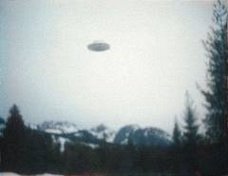
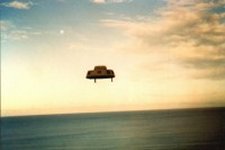
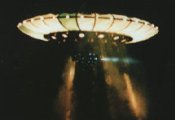
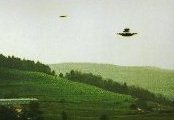
Since man first started looking up into the skies he saw things he couldn't explain. For the last fifty years or so these things have taken on the label "UFOs." Originally an abbreviation for the Air Force term "Unidentified Flying Object", it has become a synonym to most people for "Alien Spaceship." For the Air Force, though, it is simply a term to refer to something in the skies that the observer can see but not recognize. Usually the explanation is less extraordinary than a flying saucer manned by visitors from other worlds. Often a weather balloon or natural phenomenon is the cause. However, there are cases on record where no good common explanation was ever found.
A History of Strange Things in the Sky
Some claim that UFOs have been visiting the earth since ancient times. Author Erich von Daniken sees evidence of these ancient astronauts in the records our ancestors left. He sites art that includes flying beings, stories of visitors from the sky and archaeological oddities as proof. While evidence that would convince most scientists is lacking, certainly the idea that we were visited by extra-terrestrial beings in the past has it appeal and Von Daniken was able to write several successful, if somewhat inaccurate books, on the subject.
Certainly there are stories about men seeing things in the sky since ancient times. A sailor aboard Columbus's ship ,the Santa Maria, saw a glittering thing in the distance. At the end of the 19th century America experienced a flap of "airship" sightings across the nation. During World War II pilots spotted strange lights in the sky that neither seemed to be friendly or enemy craft and nicknamed them "foo fighters." The modern history of UFOs, though, perhaps begins in 1947 with an Idaho businessman and pilot named Kenneth Arnold. While flying near Mount Rainier, Washington, Arnold spotted a formation of nine silvery, disc shaped objects flying in and out of the mountains of the Cascade Range. He estimated their speed at some 1,200 miles per hour, more than twice as fast as any known aircraft of that day. He described the disc's movements to a reporter as "like pie plates skipping over the water." In his story the next day the reporter coined the term "flying saucers" and the label stuck. Sightings like Arnolds, and more fantastic stories including actual contact with occupants of the saucers, and rumors that the U.S. government had salvaged a crashed alien spaceship, and that U.S. plane had been shot down by a UFO, flourished in the late 1940's. In response the U.S. government created a group to investigate these reports. Operating under several names, the most well known being "Project Blue Book", the Air Force continued to investigate UFO reports for some twenty years. Project Blue Book hired Dr. J Allen Hynek, an astronomer at Ohio State University, as a consultant to the project. While a skeptic himself he became disillusioned with Project Blue Book, which had never been staffed with more that two or three people and given a low priority, saying it was nothing more than a "public-relations effort designed to debunk the whole thing." While not believing that UFOs where actually alien spaceships, Hynek did come to believe that there was indeed a real phenomenon at work warranting scientific investigation.
Hynek continued to work gathering information about UFO sightings without the help of the United States Air Force. He, with other interested UFO researchers, formed the Center for UFO Studies at Evanston, Illinois. Hynek and his colleagues have been responsible for organizing UFO reports into a classification system based on criteria like the distance of the sighting and the time of day.
Hynek's group broke down sightings into two major categories: Closer than 500 feet and further than 500 feet. These majors groups were then broken down into nocturnal visual observations (the majority of reports), daytime visual, and radar visual (where the object is observed both by eye and on radar).
Three Kinds of Encounters
The Center for UFO Studies also categorizes contacts with UFO's based on the amount of interaction with the witnesses as "Close Encounters" of the first, second, or third kind. Encounters of the first kind are usually reports of objects in the sky or unexplained lights. The famous Hudson Valley UFO sightings fall into this catogory. Encounters of the second kind are marked by the UFO having some kind of tangible effect on the Earth environment, such as burn marks or radioactivity. Close encounters of the third kind include reports of interaction been the witnesses and the crew of the alien spaceship.
There are also a group of reports that can be termed " alien abductions". These are stories of people who claim they were actually forced aboard a UFO by the occupants. Typically the subjects are examined by the aliens, then released. While these reports are rare when compared to the number of close encounters of the first or second kind, many people from different walks of life have reported this strange experience.
Identified Flying Objects
The wide majority of UFO reports, perhaps 80%, are simple cases of mistaken identity. Natural Identified Flying Objects (IFOs), some as common as planets like Venus and Jupiter, or as unusual as the electrical glow of Saint Elmo's Fire, may fool casual, and often even expert, observers.
Almost any man-made object that flies has also been mistaken for a UFO at one time or another. Kites, balloons and aircraft can all seem unfamiliar when seen at strange angles and in poor lighting. Experimental, or secret military aircraft may also account for a few sightings. Power lines, displaying an effect similar to the natural occuring Saint Elmo's Fire, are undoubtedly the source of a few UFO reports given how ofen UFOs are seen near high voltage transmission lines.
Hoaxes
A small portion of UFO reports are fraudulent. Either the person reporting the sighting has filed a false report, or someone has purposefully used some special effect to fool the witness into thinking he has seen something he hasn't. A UFO hoax, in general, is not illegal, so there is little to restrain someone from using one for a practical joke. Occasionally a charlatan attempts to use a hoax for profit, though more often it seems that the perpetrator is looking to feel important or gain recognition. Hoaxes can be difficult to spot and many only come to light when the hoaxer confesses his story.
UFO in Entertainment
The image most people form of UFOs, flying saucers and alien abductions is through entertainment media like books, movies and television. There is no doubt that what people see and hear in entertainment affects their perception of what they expect to see when dealing with UFO's. It is reported, though disputed, that after the success of the movieClose Encounters of the Third Kind,in 1977, UFO reports surged.
Entertainment certainly seems to affect the way we view aliens themselves. Movies have portrayed extra-terrestrial visitors as evil human eating monsters in Species to gentle kind creatures in ET.
If They are Out There, Where?
If we do assume there is intelligent life in places other than Earth, where might they be? Though scientists last century thought the planet Mars might be a good candidate, and some even thought they detected a huge canal system stretching across the planet, recent probes sent to Mars have failed to detect even bacteria-like creatures, let alone a civilization capable of producing a flying saucer. With the rest of the planets in our solar system seemingly too hot or cold, the best hope for intelligent life seems to be across the void of interstellar space in other parts of our galaxy.
In an attempt to detect intelligent life beyond our solar system researchers have conducted a number of SETI programs trying to use radio waves to detect the existence of other civilizations. So far no SETI program has been successful in finding intelligent life, but there are millions of stars in our galaxy alone that might have planets that could harbor life and carefully looking at each one of them will take a long time.
Is there intelligent life on other planets? Have they visited us on Earth? Are some UFOs alien spaceships? Or are there other explanations for saucers in the sky? Nobody has final proof one way or another. We need to keep open eyes and open minds.

Saturday, August 11, 2007
Predictions of Nostradamus that pertain to our immediate future...
 "When the prophecies-within-prophecies are deciphered, the hidden timeline of World War III is revealed."
In May 2005, members of the Italian National Library in Rome made an amazing discovery. Buried in their archives was an unknown manuscript written by the famed prophet Michel de Nostradame, or Nostradamus (1503-1566). This manuscript was handed down to his son and later donated to Pope Urban VIII. It did not surface again until now, almost four hundred years later.
Using cutting-edge data mining techniques, Dr. Michael Rathford, who has studied Quatrains of Nostradamus since 1975, sifted this complex word puzzle searching for significant patterns and relationships. Almost immediately, he came up with the predictive model known as The Nostradamus Code.
When the prophecies-within-prophecies are deciphered, the hidden timeline of World War III is revealed. A sample of the new predictions include:
#A conflict between the US and Iran
#The next major terrorist attack on the US
#Osama Bin Laden
#The nuclear destruction of Rome
The years 2008 through 2012 are explained in precise detail. Referred to by Nostradamus as the Time of Troubles, this period is full of war, despair, and evil, but also of hope and promise. Here are the predictions:
Crazed leader launches nuclear bombs on Mediterranean and Europe
(Century II, Quatrains 3 and 4)
During a period of continuing unrest, the leader of a Middle Eastern country will be able to obtain a nuclear weapon. He will go to the greatest lengths over the smallest things and will not hesitate to use the weapon because of his obsessions with deadly warfare. The people he is warring against retaliate with a nuclear weapon. The country has a coast on the Mediterranean.
One of the bombs will land in the Mediterranean instead of the land, poisoning all the fish. The passages of trade in the region will be disrupted so that the people on the other coast will be desperate for food and will eat the fish anyway. It will happen near the east coast of the Mediterranean in a region of dark-colored cliffs.
(Century III, Quatrain 83)
The nuclear weapon being dropped by one of the Middle Eastern countries will spark off yet another war on top of that war. European nations will try to interfere to diminish the threat to oil supplies. When the European countries try to interfere, the crazed leader will use the rest of his arsenal on Europe, most striking the Italian Peninsula.
The European Mediterranean coast, particularly that of Italy and France, will be almost uninhabitable, and Italy will get the brunt. This leader is not the Antichrist but helps to set the stage for the Antichrist to rise to power with little or no opposition.
Antichrist's rise to power in Middle East
(Century II, Quatrains 23 and 81)
The Antichrist will take over Iran by using a human decoy to trick the Iranian Ayatollah in power. This will involve the "yes men" and puppets of the Ayatollah's court. The Antichrist will first drive away internal supporters of the Ayatollah by starting a civil war. Then he will put forth a man as a leader, a man for Iranians loyal to the Ayatollah to concentrate their hate on. The man will be assassinated while Iran is being taken over, and his opponents will think they have foiled the overthrow of power by assassinating him. But they will find out later he was merely a decoy and that they played into the plans of the Antichrist.
The Antichrist will initially obtain power in his own sphere, Asia, and the Middle East. As he grows out of this arena, and into Europe, the next step will be into the Mediterranean, his area of strength. Because of his Middle Eastern heritage he will have already united North Africans, who are sympathetic to his cultural background, with his Asian and Middle Eastern conglomerate.
Fiasco from communication breakdown between two superpowers
(Century II, Quatrains 35 and 48)
Through a mistake, a breakdown in communications between two powerful countries will occur. The situation is a lot more complex than will appear on the surface. The leader involved will feel great regret about what happened and will want to continue his career and help correct the situation, to help make up for the adverse affects.
But he will be hung, symbolically, by others wishing to take his position in the organization. He will be hung as far as politics and his career are concerned. It will almost be like committing suicide because in the end he will be a broken man. The entire event will be viewed as a fiasco from both sides. It will have very harmful and even cataclysmic consequences.
Third world country leader creates strife
(Century III, Quatrain 60)
A "young dark man" will arise as a leader in a Third World country; his main goal is to unite the other Third World countries to do battle with the superpowers. The area of conflict will be in Eastern Europe and the Middle East, particularly around the Adriatic and the Caspian seas and Israel. No definite winner will emerge but the strife will help set the stage for the Antichrist. Many prophecies in the Bible refer to events in this region.
Antichrist profits from radar research in Europe
(Century I, Quatrain 6)
Research on a more sophisticated type of radar and sensing devices will give greater information to the operator, i.e. an airplane pilot. But the first experiments with the technology will fail in a disastrous accident, when the vibrations emitted by the device cause the chassis of the plane to become weakened and dangerous. The scientists involved with the research will have to temporarily abandon the research because of diplomatic breakdowns, the threat of war, etc.
This will take place before the Antichrist comes to full power. It will happen in Europe at the time the Antichrist is strengthening his base of power in the Middle East. The devices are currently under development but have not been tested yet. But this is another historical event that will permit the Antichrist to take over Europe.
War game simulation by Britain in Europe leads to disaster
(Century II, Quatrain 2)
In a war-game maneuver involving Great Britain and European troops a malfunctioning computer will cause the "real-world" situation to play out instead of the simulation. As a result of the error actual defenses will be activated and real bombs will be dropped on the areas of the game and cause a tragic international incident.
American Electoral College voting stalemate
(Century VII, Quatrain 41)
The presidents of the United States, a supposedly free country, have been abusing their power to an increasingly greater extent. During a time of social unrest even more so than the period of Vietnam and Watergate, the Electoral College will be evenly split over the election of the new president. The process will stalemate, with many people clamoring for whichever candidate they voted for, causing enormous tension in the country. Internationally it will be a sensitive situation.
Because of the split, and the extremely volatile and explosive social unrest, putting either candidate in office instead of the other could start a civil war or a revolution. After a long time of impassioned speeches invoking patriotism and the founding fathers, a compromise solution of holding another election will be taken, and a candidate will be installed without disaster.
Wednesday, August 8, 2007
The Prophecies of Nostradamus

Nostradamus Prophecies - Background of a "Prophet"
Nostradamus was born Michel de Nostredame in St. Remy, France on December 14, 1503. As a youth, he spent a great deal of time with his grandfather learning languages, mathematics, astronomy and astrology. He majored in liberal arts at the University of Avignon, and graduated from the medical school at the University of Montpellier. He practiced medicine and was known for successfully treating plague victims in the areas surrounding Montpellier. In 1534, Nostradamus married his first wife and had two children. Shortly thereafter, he lost his entire family to the plague, and traveled Europe for the next six years. In 1554, Nostradamus settled in Salon, France, where he married his second wife and had six children.
In 1555, at the age of 52, Nostradamus wrote his first set of prophecies, a collection of 100 "quatrains" known as a "century." (A quatrain is simply a poem with four lines.) In 1564, Nostradamus was appointed as Royal Physician to King Charles IX. During the next several years, until his death in 1566, Nostradamus wrote ten centuries of prophecies.
Nostradamus Prophecies - Some Famous Examples
The “prophecies” of Nostradamus were written primarily in French, although he threw in some Latin, Greek and Italian to murk some meanings. He also used other devices to obscure his quatrains, including symbols, metaphors and purposely-misspelled words.
Prophet and astrologer Nostradamus has captivated the imaginations of many generations through his cryptic predictions that seem to have an uncanny accuracy.
Nostradamus is credited by many people with predicting such things as the rise of Adolf Hitler, World War II, and even the assassinations of John and Robert Kennedy.
Typically, the predictions require some stretches. For example, here is a verse that people say points to the Kennedy assassination:
"The great man will be struck down in the day by a thunderbolt.
An evil deed, foretold by the bearer of a petition.
According to the prediction, another falls at night time."
Another passage has been cited as evidence that Nostradamus not only knew of the assassination, but was aware of the mysterious "second assassin" some have postulated fired from the "grassy knoll" in Dallas when John F. Kennedy was shot.
"The ancient work will be accomplished,
and from the roof evil ruin will fall on to the great man.
Being dead, they will accuse an innocent of the deed,
the guilty one hidden in the misty woods."
Fascinating stuff, but hardly the same as if Nostradamus had named Kennedy and Lee Harvey Oswald hundreds of years ago.
Shortly after the September 11th terrorist attacks in the U.S., a large number of alleged Nostradamus prophecies began circulating the Internet and news media. Here are a few of them:
"In the year of the new century and nine months, From the sky will come a great King of Terror... The sky will burn at forty-five degrees. Fire approaches the great new city..."
"In the city of York there will be a great collapse, two twin brothers torn apart by chaos while the fortress falls the great leader will succumb third big war will begin when the big city is burning"
"It has been foreseen that exactly three hundred and fifty years into the future, silver phoenixes shall strike down the twin brothers of oppression That carried the king's nation, which shall bring upon the apocalypse. In the City of God there will be a great thunder, two brothers torn apart by chaos"
So, did Nostradamus predict the attacks against the Twin Towers in New York? No, Nostradamus didn't write these quatrains - they were tweaked and twisted to somewhat match the event. For example, the first one says "In the year of the new century and nine months," but Nostradamus' original quatrain reads, "In the year 1999 and seven months, from the skies shall come an alarming powerful king" (Century 10:72). Neither is there a mention of "twin brothers" being "torn apart." The quatrain actually says, "Two royal brothers shall war so much one against the other" (Century 3:97). Finally, as for collapsing in the city of York and the sky burning, this is as close as he gets: "The heaven shall burn at five and forty degrees, the fire shall come near the great new city... when they shall make a trial of the Normans" (Century 6:97). Nostradamus never even mentioned the words "fortress" or "big war."
Did Nostradamus predict the end of the world?
Many people are asking, "Did Nostradamus predict the end of the world?" The very short answer to this question is no. His 'so called' prophesies and predictions have been extracted from the approximately 1000 letters he wrote in 4-line (quatrains) and 6-line (sixains) verses. In one of the letters, he clearly states (in plain French) that his predictions will go on for thousands of years, out to the year 3797. This is not a prediction for the end of the world, rather a statement about how far his projections would extend.
His astrological bent had a great deal to do with the content of his writings. Astrological authorities believed that history inevitably repeats itself. In one of his pieces, he wrote: "But the certainty of things past and present gives us confidence in things to come." Nostradamus had only to look back at the ancient chronicles, in particular those regarding 'omens', to find an abundance of material for his quatrains, and sixains. This he did to great effect.
Nostradamus Prophecies - Why do we care so much?
After the 911 attacks, Nostradamus prophecies were everywhere. Nostradamus made the BBC News and his prophecies were written about in books on Amazon.com's bestseller list. Dramatically, "Nostradamus" even displaced "sex" from the Internet's top-fifty list for a short period of time. Obviously, people love the notion of prophecy. The tabloids are a testament to that. The problem with the “prophecies” of Nostradamus is that they are mostly vague and usually erroneous. But some have, seemingly come true, also! Hence the mystery – could Nostradamus really see into the future? Can we anticipate future events by studying his writings? You decide.
The last laugh...
Nostradamus is said to have predicted his own death. When his assistant wished him goodnight on July 1, 1566, Nostradamus reputedly pronounced, "You will not find me alive at sunrise." He was found dead on July 2, 1566.
Nostradamus was interred standing upright in the Church of the Cordeliers of Salon. However, his story does not end there; he was disinterred twice, once on purpose and once maliciously.
In 1700, his body was moved by the city to a more prominent crypt. When a necklace was found on his skeleton bearing the date '1700', his body was hurriedly reinterred.
During the French Revolution, in 1791, some drunken soldiers broke into his tomb. The mayor quickly placated the mob by describing how Nostradamus had predicted the revolution, and they replaced the bones in the crypt.
However, Nostradamus had the last laugh. In Century 9, Quatrain 7, he had written:
"The man who opens the tomb when it is found
And who does not close it immediately,
Evil will come to him
That no one will be able to prove."
Reputedly, the soldiers who desecrated his tomb for the final time were ambushed on their way back to base and killed to the last man.
Friday, August 3, 2007
Levitation
Levitation is the process by which an object is suspended against gravity, in a stable position, by a force without physical contact.
It is also a popular conjuring trick, such as apparently raising a human being without any physical aid. The illusion can be produced by clever mechanics, lighting arrangements or other means.
So - is it really possible? The jury is still out on this one...the debate continues. However, without going into the discussion on whether levitation stories are true or not, it is still possible to create an illusion of suspension in air. All you need is a camera and a quick photographer. See how some people did it:
Monday, July 30, 2007
The Cause of Tutankhamun's Death
 In 1323 B.C., a young Egyptian king died. His name was Tut.ankh.Amum - "the living image of Amun". Tutankhamun is the best-known pharaoh of ancient Egypt. He was probably the son of Akhenaten, the heretic king of the eighteenth dynasty. His mother was probably Queen Kiya, one of the king's secondary wives. Ankhesenpaaten (or Ankhesenamum), his older half sister, became his queen. He ascended the throne in 1333 B.C., at the age of nine, and reigned until his early death at the age of about eighteen. Some speculate that he was murdered and others think he may have been deliberately sent into battle to be killed. However, the exact cause of his death is unknown. Those who believe he was murdered point to the hole in his skull as evidence, but some experts believe the hole was made after his death. His mummified body was so badly preserved that we may never know the true fate of this minor pharaoh.
The discovery of Tutankhamun's tomb by Howard Carter in 1922 is considered the most important archaeological find of the century. After years of painstaking work in the Valley of the Kings, Carter's patron, Lord Carnarvon, had warned him that that would be the last season of work because nothing significant had been found. On November 22 of that year, Carter's persistence finally paid off. Tutankhamun became a household name, and his magnificent treasures became the measuring stick for all future archaeological discoveries. The mysteries surrounding his life and death are gradually being solved. And his story continues to unfold as new theories are proposed in an attempt to explain what really happened to the boy behind the golden mask.
Researchers continue to investigate the cause of Tutankhamun's premature death. Bob Brier, a mummy specialist from Long Island University, has been tracking down clues that indicate Tutankhamun may have been killed by his elderly chief advisor and successor, Ay. An X-ray of his skull revealed a calcified blood clot at its base. This could have been caused by a blow from a blunt implement, which eventually resulted in death.

The painting in Tutankhamun’s burial chamber depicts Ay at the "opening of the mouth" ceremony, giving life and breath to the young deceased pharaoh. Ay, a commoner, is wearing the leopard skin of a high priest and the crown of a pharaoh. Since Tutankhamun did not have a child to succeed him, it appears that Ay decided to seize the crown and declare himself King of Egypt.
Researchers continue to investigate the cause of Tutankhamun's premature death. Bob Brier, a mummy specialist from Long Island University, has been tracking down clues that indicate Tutankhamun may have been killed by his elderly chief advisor and successor, Ay. An X-ray of his skull revealed a calcified blood clot at its base. This could have been caused by a blow from a blunt implement, which eventually resulted in death.
The painting in Tutankhamun’s burial chamber depicts Ay at the "opening of the mouth" ceremony, giving life and breath to the young deceased pharaoh. Ay, a commoner, is wearing the leopard skin of a high priest and the crown of a pharaoh. Since Tutankhamun did not have a child to succeed him, it appears that Ay decided to seize the crown and declare himself King of Egypt.
There were at least two other deaths following that of Tutankhamun. His young wife Ankhesenamum pleaded with the king of the Hittites to send her one of his sons for a husband. She did not want to marry a servant, such as Ay. A son was sent, but he was murdered before he arrived.
So who did Ankhesenamum marry? There is now evidence that she married Ay. A ring has been found with her cartouche inscribed next to his. Did Ay force her to marry him, thus legitimizing his claim to the throne? Within three years of Ay's death, Ankhesenamum disappeared. Could she also have been the victim of a serial killer?
What happened to Ay? He died within a few years of seizing the throne. His cartouches, which he had inscribed on temple walls, were eradicated, his tomb was robbed and vandalized, and his mummy disappeared. His name was also eliminated from the official list of pharaohs, as was that of Tutankhamun.
Another theory on Tutankhamun's death suggests that he was murdered by General Horemheb, a man of low birth who became one of Akhenaten's closest advisors. Under Tutankhamun, he was appointed commander-in-chief of the army and deputy of the king. Following the demise of Tutankhamun and Ay, Horemheb became pharaoh. During his reign, he had the names of Akhenaten, Tutankhamun and Ay removed from the royal list of pharaohs, which suggests that he had personal reasons for eradicating those rulers from the records.

A new theory contends that the balance of probability is highly in favour of Tutankhamen having died of complications from aninherited genetic disorder rather than at the hands of a murderer.
Tutankhamen's father Akhenaten most likely suffered from Marfan's Syndrome – which could have been inherited by Tutankhamen. The Encyclopaedia Britannica entry on the subject of Marfan's syndromeindicates that sufferers often die from aortic aneurysm.
At the base of the human brain there is a blood vessel structure knownas the Circle of Willis. It is not unknown for a genetic weakness toappear in the blood vessels of this structure in the form of a berryaneurysm. This is a small, sacular aneurysm of a cerebral artery and itusually occurs at the junction of vessels in the Circle of Willis. If this aneurysm ruptures, it is generally fatal, event today. InTutankhamen's time, it is inconceivable that his doctors would have been able successfully to intervene, even though there is evidence (e.g. in the Edwin Smith Papyrus) that Egyptian doctors knew something of brain surgery techniques.
Such a ruptured aneurysm in the brain would fully and satisfactorilyexplain everything without the need to resort to a murder theory, especially as it is known that a berry aneurysm may rupture without warning causing intracranial haemorrhage. With the Pharaoh's brain long gone, no supporting pathological evidence is possible, but the location of the blood clot traces, as found on the X-ray, seems to speak for itself.
Since Carter returned Tut to his tomb in 1926, the young king has been x-rayed twice: in 1968 by a team from England's University of Liverpool and in 1978 by a University of Michigan anthropologist.
The 1968 x-rays revealed a bone fragment inside the king's skull. The finding prompted the theory that the boy king was murdered by a blow to the head during the unsettled period of his reign.
In January 2005 the mummy was removed from its tomb in the Valley of the Kings for the first time in almost 80 years. The remains — still lying in the tray of sand where they had been placed by Carter — were taken from the sarcophagus and transported to a nearby trailer with mobile CT scanner. The 15-minute CT-scan session yielded some 1,700 images.
Detailed CT scans of King Tutankhamun's mummy found no physical evidence of murder, according to the announcement made by Egypt's Supreme Council of Antiquities, after the images were analysed. But the scans did reveal unusual features, including a broken leg, which some experts think may have led to the boy king's death.
The scans cannot rule out "non violent" murder, such as poisoning. But they have apparently disproved the oft-repeated theory that King Tutankhamun was murdered by a blow to the head.
The bone fragments revealed by the 1968 x-rays are now deemed to be after-death damage, likely inflicted by Carter, when Carter and his team dismembered much of the mummy to retrieve artifacts and remove the body from its sarcophagus, because the fragments show no evidence of being inundated with the embalming fluid used to preserve the pharaoh for the afterlife. Tutankhamun had been affixed to his coffin by the resins and other fluids used in the embalming process.
The controversy continues. No concrete conclusion has been arrived yet. Did the boy king die a violent or non-violent death? Was he murdered – by a blow on the head or by poison – or did from an accident injury or a clot in the brain arising from a genetic disorder? Will we ever know the truth?
Since Carter returned Tut to his tomb in 1926, the young king has been x-rayed twice: in 1968 by a team from England's University of Liverpool and in 1978 by a University of Michigan anthropologist.
The 1968 x-rays revealed a bone fragment inside the king's skull. The finding prompted the theory that the boy king was murdered by a blow to the head during the unsettled period of his reign.
In January 2005 the mummy was removed from its tomb in the Valley of the Kings for the first time in almost 80 years. The remains — still lying in the tray of sand where they had been placed by Carter — were taken from the sarcophagus and transported to a nearby trailer with mobile CT scanner. The 15-minute CT-scan session yielded some 1,700 images.
Detailed CT scans of King Tutankhamun's mummy found no physical evidence of murder, according to the announcement made by Egypt's Supreme Council of Antiquities, after the images were analysed. But the scans did reveal unusual features, including a broken leg, which some experts think may have led to the boy king's death.
The scans cannot rule out "non violent" murder, such as poisoning. But they have apparently disproved the oft-repeated theory that King Tutankhamun was murdered by a blow to the head.
The bone
 fragments revealed by the 1968 x-rays are now deemed to be after-death damage, likely inflicted by Carter, when Carter and his team dismembered much of the mummy to retrieve artifacts and remove the body from its sarcophagus, because the fragments show no evidence of being inundated with the embalming fluid used to preserve the pharaoh for the afterlife. Tutankhamun had been affixed to his coffin by the resins and other fluids used in the embalming process.
The controversy continues. No concrete conclusion has been arrived yet. Did the boy king die a violent or non-violent death? Was he murdered – by a blow on the head or by poison – or did from an accident injury or a clot in the brain arising from a genetic disorder? Will we ever know the truth?
Saturday, July 28, 2007
Easter Island's Walking Stones
 For centuries, explorers and anthropologists have speculated about the moai, the enormous stone statues scattered over Easter Island. Though science has gone far to explain what the moai are and where they came from, they still stand as a warning to those who would exploit our natural resources.
First brought to the attention of the western world by the Dutch navigator Jakob Roggeveen, Easter Island is the world’s most remote inhabited place. Called “the navel of the world” by islanders, it consists of 64 square miles of dry land in the middle of the Pacific Ocean, and is located 1,250 miles from the nearest inhabited outpost of civilization—Pitcairn Island—and 2,000 miles from the South American mainland.
When Roggeveen’s three ships landed on the island on Easter Sunday, 1722, the native population numbered a mere 400. No trees over ten feet grew anywhere on the island, the indigenous inhabitants had but few food resources, and their technology was limited to stone, bone, an
 d shell tools. Despite the dearth of resources, the islanders had somehow managed to erect almost 900 moai, which stood looking inland from the coasts with their sightless eyes.
How could the enigmatic moai—the smallest of which weighs several tons, and some of which are over 65 feet tall and weigh more than 80 tons—have been created by a stone-age culture, and for what purpose? The answer to the mystery is a blend of anthropology, environmental science, and engineering that, if anything, is even more fascinating than the tales.
According to local legend, in about 400 AD, the Polynesian king Hotu Matu’a sent seven young men eastward to look for a new homeland for his people. The place they found was Easter Island.
The people of Easter island thrived from the 11th to the late 17th centuries, with a top population of about 12,000. In those days, the island was thickly forested with palm trees, which were used to make canoes for fishing, nets, and ropes, and also to provide a home for nesting birds.
Though the trees had long since been cleared by the time the first Europeans visited the island, archaeologists have found remains of their pollen, as well as the bones of the porpoises and birds that provided an important part of the native diet. The trees were also a critical element in an economy, as it gave the islanders enough time and energy to carve, transport, and raise the moai.
By carbon-dating artifacts, such as fragments of wood found in association with the stones, scientists have determined that the majority of the enigmatic stone statues were built in the 14th and 15th centuries, cut from the tuff (a type of light volcanic stone) with pickaxes made of basalt, a harder volcanic stone.
Archaeologists supposed that the Easter Islanders used sleds and log rollers to move the heavy stone statues. In fact, the amount of lumber needed to move the moai into their existing positions around the island from where they were quarried is probably what caused the island’s deforestation.
However, the islanders insisted that the moai had been moved by their chiefs’ mana (a mysterious cosmic power that seemed to carry with it dominion over the material world) which caused the stones to “walk” to their current location. They also believed that the statues themselves were endowed with their own mana, which they emitted from their coral eyes to protect the island from harm.
Explorer Thor Heyerdahl thought there might be some truth to the legend so, in 1985, he put it to the test. Because of the moai’s pot-bellied construction, they have a low center of gravity, making them difficult to tip over. Heyerdahl’s team rigged a fallen moai up in a gurney and, by having alternate teams pull on ropes, they were able to “walk” the moai forward about seven yards. (We can do this when we walk a heavy piece of furniture into a corner of our house.)
The end of the moai-building period coincided with Easter Island’s great environmental disaster when the islanders ran out of palm trees around 1400. Without the trees, they could not build canoes for fishing, nor make ropes for moving moai, and they had no wood for fires. With no place to roost, the birds moved on and consequently, there were no birds or eggs to eat.
The crisis of belief this brought about was profound; angry that their idols were unable to protect them from this environmental disaster, the natives removed the coral eyes of the moai and buried many of the statues. The conflict was ended by a novel contest: a representative from each tribe was to swim a mile to the neighboring islet Moto Nui. The first to return with the egg of a sooty tern earned the right to distribute the island’s resources for the year. Europeans brought sheep and other goods to the island in the 18th century, which helped the islanders’ situation, but the newcomers were a plague as much as they were a boon, as the island’s population was once again decimated by slave-raiding in the 19th century.

Despite archaeologists’ insights into the construction of the moai, mysteries remain. The islanders’ writing, called rongo rongo, has never been translated. Only about 21 examples of this writing exist today. In the 1930s, Hungarian linguist Guillaume de Hevesy pointed out the writing system’s similarity to certain signs and symbols used by the ancient Harappan culture of the Indus Valley, in modern Pakistan, suggesting that the advanced Harappan civilization may have been the ancestors of the original Polynesian settlers.
Most significantly, Easter Island stands as a warning to us. The moai, examples of spiritual power embodied in material things, were raised by tribal leaders hungry to declare their power and status. As a result of this race to consume resources, the island was deforested and its civilization plunged into chaos. Before long, the islanders were not only unable to build moai, but also unable to obtain the necessities of life. As such, the mysteries of Easter Island stand as a warning to our present culture of conspicuous, mindless consumption.
Tuesday, July 24, 2007
The Universal Flood – And Noah’s Ark
 Was the earth once covered completely for a time with water, caused by a great flood? The earliest known civilization, the Sumerians (3000 B.C.) believed that such a flood occurred. The mythology of Greece also shares this Judeo-Christian story. Almost every major culture has a story about a great flood that covered the planet and how one man and his family survived it.
A startling number of creation lores have fixed to them the "flood" myth. In the mythology of most rudimentary cultures there can be discovered a flood epic, with the deluge being of such mammoth magnitude that it is surmised to have blanketed Earth completely. Such was the destructive force of this flood that few land animals and plants endured it.
In Wes
 tern civilization the most famous version is the story of Noah and the Ark as declared in Genesis. Although it may be the best known, the account of Noah's adventure is neither the only such legend nor the oldest such legend. Legends of a flood can be found in the folklore of such diverse locations as the Middle East, India, China, Australia, Southern Asia, the islands of the Pacific, Europe, Africa, and the Americas. But the flood legend on which the story of Noah is based had its origins among the peoples of ancient Mesopotamia; in the epic “Gilgamesh”. (It was during the Sumerian era that a great flood overwhelmed Mesopotamia. So great was this flood that stories about it worked their way into several ancient cultures. The Sumerian counterpart of Noah was Ziusudra, and from him was developed the Babylonian figure Utnapishtim, whose story of the flood was related in the “Epic of Gilgamesh”.)
The Greek flood legend has Zeus deciding to destroy the Earth, but he allows the good King Deucalion and his family to be saved by taking refuge in an ark well stocked with provisions. Texts from the 6th century BC in India tell the story of Manu, (meaning "man") who is warned by a fish about a coming flood. In the legend Manu builds a boat and saves himself.
In China the flood myth had a different twist than the legends told in the West. The flooding of the land year after year was seen as an obstacle to successful agriculture. The floods were made much less damaging through the efforts of a hero named Yu the Great, who dredged the land to provide outlets to the sea for the water.
At this interval in history, there was one terra firma mass combining present day Europe, Africa, America, and all other lands bordering them. There were lakes and rivers that dotted the vista but most of the water was well underneath the earth's surface. According to both legends and researchers, the deluge started with torrential downpours followed by the splitting of the earth. Stress on the earth's crust caused it to fissure northward and southward. The earth was polarized open at a rate of 3 miles per second encircling the globe in approximately 2 hours. This split created continental plates that divided east from west.
The succinct rock beneath the continental plates was forced upward creating the mid-Atlantic ridge currently located in the center of the Atlantic Ocean. As the ridge was pushed upward, the continental plates were pushed apart at rates up to 45 miles per hour. The two continental plates eventually collided with other plates causing the land to move upward or downward. The upward locomotion created the mountainous regions of the world. The downward activity resulted in deep trenches in the ocean floors. This explains why major mountain regions and ocean trenches are parallel to one another.
Waters that were initially released from the earth ruptured forth into the atmosphere at supersonic speeds. As the water went higher and higher into the atmosphere, much of it became solid ice. Rain, hail, and snow fell on the earth, according to most accounts, for forty days and forty nights. All life forms that found themselves on top of mountains were instantly frozen in time. This explains the fish and animal fossil remains in nearly every mountain region of the world, and how some are so well preserved. The so called "ICE AGE" was in fact just a matter of days.
Sediment from displaced earth rapidly settled trapping animal and plant life beneath it. The once thriving cities disappeared under tons of rock and then mud. The decomposed remains of plants, trees, and animals beneath this sediment currently provide the world's oil supply.
After one hundred and fifty days, the water receded and dry land appeared. Noah and his family came out of the ark 370 days after the torrent began. The Ark rested on Mount Ararat, in Northern Turkey - where some believe its remnants exist to this day.
Jewish historians as well as many ancient civilizations throughout the world spoke of the great flood. Scientists have proven conclusively that there was indeed a flood that covered the entire earth and this occurrence is carved in stone or clay in nearly every primordial civilization. Thousands of individuals have reportedly seen the Ark. In recent history, there were two major sightings of the ark. In 1883, the Turkish military found the ark while investigating damage caused from a massive earthquake. They not only found and entered the Ark, but also returned with pieces of wood from the structure. Because of the acceptance of Darwin's theory of Evolution, the find was ignored by most in the western world. However, in 1917, th
 e Czar of Russia sent an expedition to find and document the location of the ark. It was found and photographed. Unfortunately, the Czar's government was toppled by the communists and documentation was either destroyed or hidden in Kremlin safes. The Czar's mother spoke of the expedition years later, and had a cross made from the wood of the ark. Since this time, numerous glimpses have been reported. Racial fighting and terrorist camps in the area have restricted contemporary attempts to ascertain the Ark. This territory is currently under the control of Kurdish terrorists.
The US military knows the location and has satellite photographs of the Ark to prove it. Because of security
 considerations, they will not release these photographs. American Air force navigators used the Ark as a landmark while on bombing raids during World War II.
Legend has it that God promised Noah He would never destroy the earth in a flood again. He made a covenant with man and placed the rainbow in the clouds as a sign. Each time the rainbow is observed, it is a reminder of this covenant God made with man.
Saturday, July 21, 2007
The Mystery Of The Dragon's Triangle...
 An area located southeast of Japan, between Japan and the Bonin islands, and more exactly in the vicinity of Iwo Jima and Marcus Islands, has been officially declared by the Japanese authorities as a danger zone for shipping. Nine big and modern ships disappeared in this area during only four years between 1950 and 1954. Totally, several hundred crewmen, fishermen and pilots have disappeared in this area so far. The area's name is Dragon's Triangle or Devil's Sea.
The US Air Force has also been concerned about aircraft that have mysteriously disapeared in this region.
Many extensive searches, both from air and by sea, have not revealed anything. No wreakages or oil spills have been found. A Japanese expedition was sent to investigate this mysterious and dangerous place. The Kaio Maru No. 5 - the survey ship - with 22 crewmen and 9 scientists aboard, itself disappeared in 1955...
Friday, July 20, 2007
THE QUEST FOR SASQUATCH
 There has long been a legend of forest giants among the native tribes of the Pacific Northwest. These legendary creatures are today known as Bigfoot or Sasquatch.
Reports of bi-pedal primates stalking the wilderness stretch back to the times of the Vikings, and even before. There is strong evidence to support the existence of such a creature in the woods of Pennsylvania and Virgina. Covered in forests, these states are reknowned for hunting and wildlife and this dense wilderness would be a perfect home for the elusive creature.
WHAT IS IT? In a theory touted by noted physical anthropologist and Bigfoot researcher Dr. Grover Krantz, the Sasquatch is a living version of the long extinct ape Gigantopithecus blacki. Dr. Krantz believed that the Gigantopithecus was bi-pedal based on the configuration of its lower jaw.
WHAT IS IT? In a theory touted by noted physical anthropologist and Bigfoot researcher Dr. Grover Krantz, the Sasquatch is a living version of the long extinct ape Gigantopithecus blacki. Dr. Krantz believed that the Gigantopithecus was bi-pedal based on the configuration of its lower jaw.
One of the biggest arguments skeptics present for the non-existence of Bigfoot is that no fossils of ancient bi-pedal primates have ever been recovered from the Pacific Northwest. If Bigfoot does inhabit the woods of North America, it most likely would have migrated there between 20,000 and 50,000 years ago, possibly alongside early Homo sapiens, and in turn, would have left fossil evidence behind. However, one must consider that Gigantopithecus blacki was identified in Asia only by jaw bone fossils and loose fossilized teeth. No full or partial skeletal fossils have ever been recovered, such is also the case with modern day Bigfoot remains.
WHERE IS IT? Researchers have classified the Bigfoot species into three different races based on physical characteristics and geographic location.
WHERE IS IT? Researchers have classified the Bigfoot species into three different races based on physical characteristics and geographic location.
1. Sasquatch: Has 5 toes, brown to black fur and primarily inhabits the Pacific Northwest of North America.
2. Skunk Ape: Has 3 toes, orange to brown fur and inhabits the Southeastern United States.
3. Yeti: Has 5 toes, white to gray fur and inhabits the Himalayan Mountains
Researchers don't yet know enough about the individual races to classify them as separate species although this possibility has been raised. The genetic adaptations in each race are the result of natural selection starting when the Sasquatch moved from Asia to North America and adapted darker fur, better blending in with the dense woodland environment. As the species moved across the United States due to territorial deconcentration and "rogue male" transmigration, the species adapted a three-toed foot better designed for climbing trees and travelling through marshy areas in the Southeast.
Researchers don't yet know enough about the individual races to classify them as separate species although this possibility has been raised. The genetic adaptations in each race are the result of natural selection starting when the Sasquatch moved from Asia to North America and adapted darker fur, better blending in with the dense woodland environment. As the species moved across the United States due to territorial deconcentration and "rogue male" transmigration, the species adapted a three-toed foot better designed for climbing trees and travelling through marshy areas in the Southeast.
The Bigfoot living in the Northeast probably began establishing a solid population base over the last 3,000 years, and it remains the least densely populated by these creatures for several reasons, namely, a high concentration of humans and competition between races for food supply. More than likely, there is increased diversity in the Bigfoot species, lending to numerous races - other than those which have been listed in this article.
Wednesday, July 18, 2007
The Ghost of Mary Bregavy
 In 1934, on a cold winter night, a young girl was returning home from a dance she had attended at the O. Henry Ballroom on Archer Avenue in a suburb of Chicago.
In a hit and run car accident, the girl thought to be known as Mary Bregavy was killed. Wearing the long white gown and shoes that she had worn to the dance, Mary’s parents laid her body to rest in Resurrection Cemetery.
For 5 years, Mary rested peacefully, until one day in 1939. On a cold January night of that year, a cab driver picked up a woman on Archer Avenue wearing a long white gown. She directed him North on Archer. She asked him then to stop and pointed to the place she wanted him to stop. He looked at where she pointed and then turned to look at her, only she was gone. The cab had stopped directly in front of Resurrection Cemetery.
That same year, a man named Jerry Palus reported dancing with a beautiful blonde girl in a long white dress. After a night of dancing, he offered her a ride home. She directed him North on Archer Avenue. When they began to drive by Resurrection Cemetery, she dashed out of his car never to be seen by him again.
A more concrete report of Mary’s ghost occurred on August 10, 1976. A man was driving past Resurrection Cemetery in the evening and saw that a girl appeared to be locked behind the steel gates. He reported this to the police and Police Sergeant Pat Homer responded to the call. He looked for this girl to no avail, but what he did find was that two of the steel bars had been pried apart and human handprints were embedded into the metal. On the bars themselves were scorch marks which looked like skin texture and handprints.
Experts were brought in to explain how the bars could have been bent and no one could offer any explanation. In 1977, the bars were blow-torched by the cemetery and though the scorch marks were burned off, the handprints that were embedded into the metal could not be removed!
Other reports in 1978, 1979, 1980, 1981, 1982, 1997 and 1998 have all told similar stories. Many people have reported seeing a girl dash in front of their cars in front of the cemetery. She is so close that people end up slamming on their brakes scared that they are going to hit the girl. But when the cars stops, they never end up hitting anyone and a girl is never to be seen. Other stories tell of people calling the police to report a woman lying very injured or dead on the side of the road in front of the cemetery. By the time the police or ambulance arrive, the woman is gone but an imprint of her body remains on the ground.
Could these numerous accounts of Resurrection Mary be true or have people made them up just to make a good ghost story? Will this question ever be answered?
Tuesday, July 17, 2007
GIANT CHIMPS OF THE MAGIC FOREST
 Legend goes that, deep in the Congolese jungle, is a magic forest. In this fabled land live a band of apes that, according to local accounts, passed down over the generations, kill lions, catch fish and even howl at the moon.
Local hunters speak of massive creatures that seem to be some sort of hybrid between a chimp and a gorilla. Their location at the centre of one of the bloodiest conflicts on the planet, the civil war in the Democratic Republic of Congo, has meant that the mystery apes have been little studied by western scientists.
Reaching the region means negotiating the shifting fortunes of warring rebel factions, and the heart of the animals' range is deep in impenetrable forest.
One set of speculation concludes that the apes may be some yeti-like new species or a chimp/gorilla hybrid. Another view is that they are actually a population of super-sized chimps with a unique culture - and it seems, a taste for big cat flesh.
Some expeditions have started venturing into the Congolese jungles in an attempt to track down these legendary creatures. Hopefully they will return – with news of unimaginable discoveries!
Monday, July 16, 2007
The Antikythera Mechanism
A perplexing artifact was recovered by sponge-divers from a shipwreck in 1900 off the coast of Antikythera, a small island that lies northwest of Crete.
The divers brought up from the wreck a great many marble and and bronze statues that had apparently been the ship's cargo. Among the findings was a hunk of corroded bronze that contained some kind of mechanism composed of many gears and wheels. Writing on the case indicated that it was made in 80 B.C., and many experts at first thought it was an astrolabe, an astronomer's tool.
An x-ray of the mechanism, however, revealed it to be far more complex, containing a sophisticated system of differential gears. Gearing of this complexity was not known to exist until 1575!
It is still unknown who constructed this amazing instrument 2,000 years ago or how the technology was lost.
The Ica Stones
Beginning in the 1930s, the father of Dr. Javier Cabrera, Cultural Anthropologist for Ica, Peru, discovered many hundreds of ceremonial burial stones in the tombs of the ancient Incas.
Dr. Cabrera, carrying on his father's work, has collected more than 1,100 of these andesite stones, which are estimated to be between 500 and 1,500 years old and have become known collectively as the Ica Stones.
The stones bear etchings, many of which are sexually graphic (which was common to the culture), some picture idols and others depict such practices as open-heart surgery and brain transplants. The most astonishing etchings, however, clearly represent dinosaurs - brontosaurs, triceratops, stegosaurus and pterosaurs.
While skeptics consider the Ica Stones a hoax, their authenticity has neither been proved or disproved.
Sunday, July 15, 2007
The Stones Of Stonehenge
 Stonehenge is a megalithic monument on the Salisbury Plain in Southern England, composed mainly of thirty upright stones (sarsens, each over ten feet tall and weighing 26 tons), aligned in a circle, with thirty lintels (6 tons each) perched horizontally atop the sarsens in a continuous circle. There is also an inner circle composed of similar stones, also constructed in post-and-lintel fashion.
Every year on the first day of summer, the Sun rises at a point that is farther north than on any other day of the year. At the ruins of Stonehenge in England, this solstice sunrise appears on the horizon in direct alignment with the massive heel stone. This is the most outstanding feature of this ancient monument, built during the same era as the Great Pyramid of Egypt. There is now a general consensus that the builders of Stonehenge used it to mark this special day as the beginning of each year. By counting the number of days between these annual alignments, they could determine the length of the year. This could serve as a practical calendar to mark holidays and seasonal festivals and to ensure the timely planting and harvesting of crops.
But to predict eclipses, knowledge of two other cycles is required. One of these - the length of the lunar month - is easily determined. It is simply the number of days between one full Moon and the next. This cycle of 29-1/2 days is marked at Stonehenge by two rings of 29 and 30 holes, which together average 29-1/2. The other cycle, however, is of an altogether different character: it is a cycle of rotation of two invisible points in space. The evidence shows that the builders of Stonehenge probably discovered this cycle and could have used it to predict eclipses.
These two invisible points in space are called the lunar nodes (from the Latin for "knot"). They are the points where the Moon's orbit, which is tilted at a slight angle, intersects the plane of the Earth's orbit. It would have taken many decades of watching countless risings and settings of the Moon to figure out the cycle of the lunar nodes. This information - which must have been passed on from generation to generation - is preserved at Stonehenge. All the Moon alignments necessary for determining this cycle are marked by massive stones.
Who were these people who observed this subtle cycle even before the first metal tools were used by humankind? Some have suggested that Stonehenge was built by Druids, but we don't really know much about the builders. We do know that the actual motions of the Sun and the Moon are reflected in the structure of Stonehenge, and we can reason how it may have been used to keep track of these cycles. The number of stones or holes in the ground in the various rings around Stonehenge each represents a certain number of days or years in the cycles. By moving markers (such as stones) around a ring in time with the cycles, the positions of the Sun and Moon -- and the two invisible points -- can be tracked.
An eclipse can occur only when the Sun is close to being aligned with a node. By using Stonehenge to keep track of the position of the Sun and the nodes, these "danger periods" for eclipses can be predicted. A new (or full) Moon appearing during one of these periods would call for a special vigil to see if the solar (or lunar) eclipse would be visible from Stonehenge. A total solar eclipse would be a rarity. But the law of averages confirms that either a partial solar eclipse or a lunar eclipse can be seen (weather permitting) from the same point on the Earth about once every year.
Why would eclipses have been so important to the ancient people of Stonehenge? Perhaps they considered the darkening of the Sun or the Moon a fearsome event - a celestial omen of doom or disaster. Many cultures have interpreted eclipses this way. But the sophistication of the astronomy of Stonehenge suggests that the builders had something different in mind. Their understanding of the solar and lunar cycles must have led to a high regard for the cosmic order. Eclipses may have been seen as affirmations of the regularity of these cycles. Or perhaps the unseen lunar nodes formed an element of their religion as invisible gods capable of eclipsing the brightest objects in the heavens.
The idea that Stonehenge may have been a center for some kind of worship has occurred to many. It is not hard to imagine Stone Age people gathering at a "sacred place" at "sacred times" (such as solstices, equinoxes, and eclipses) to reaffirm their religious beliefs through ritual practices. British antiquarian Dr. William Stukeley, who in 1740 was the first to note the summer solstice alignment at Stonehenge, advanced the notion that the monument was built by Druids to worship the serpent. He claimed that Stonehenge and similar stone circles had been serpent temples, which he called "Dracontia." Could this serpent symbolism be related to eclipses? Recall that the key to eclipses is the position of the lunar nodes. The length of time for the Moon to return to a node (about 27.2 days) astronomers call the draconic month. (Draco is the Latin word for "serpent" or "dragon.) Perhaps the mythical serpents of Stonehenge and the legendary dragon that eats the Sun are symbols of the same thing: the invisible presence in time and space that eclipses the Sun and the Moon.
Monday, July 9, 2007
ATLANTIS - THE LOST CONTINENT
Around 355 B.C., Plato, the great Greek philosopher, wrote a book called: “Timaeus”. In this book Plato, then in his seventies, chose the literary device of writing as though he was a young pupil listening to his teacher Socrates discussing various philosophical matters with a group of friends. The main reason why this book is famous is that, in it, Plato has recounted the story of a mysterious continent called Atlantis. In the book, the story is attributed to one of the friends present, Critias, who says it is “derived from ancient tradition”.
“Once upon a time,” according to the account given in Plato’s book, “there was, beyond the strait you call ‘The Pillars of Hercules’, an island larger than Asia Minor and Libya together…On this island of Atlantis, ther e existed a great and admirable kingdom.” Plato proceeded to describe Atlantis further in another book: “Critias”, also written around 355 B.C. Atlantis was a semi-tropical island continent of, perhaps, 400,000 sq. kms, with an estimated population of 20 million. For centuries (12,000 to 9,000 B.C.), said Plato, the Atlanteans were the dominant civilization in their half of the world, ruling a Mediterranean empire that extended to the borders of Egypt and Italy. Eventually, wrote Plato, they became “obsessed with the wrongful pursuit of material gain and power”, and tried to conquer the entire Mediterranean world. They were beaten back by the ancestors of the Greeks.
Then, according to Plato, “in a single dreadful day and a single dreadful night,” Atlantis was swallowed up by the sea.
Aristotle, Plato’s most famous disciple, believed that Plato had made Atlantis up, and this doubt has continued over the centuries. L. Sprague de Camp, in his scholarly work: “Lost Continents”, has analysed the evidence carefully and convinced himself that “the most reasonable way to regard Plato’s story, then, is an impressive, if abortive, attempt at a political, historical and scientific romance – a pioneer science-fiction story”; his view is that, like Thomas More’s “Utopia”, Plato’s story described an ideal community as preconceived by the author.
However, more than 2,000 books on the subject disagree, and while it may be comfortable to take the orthodox line, the chances are that Atlantis actually existed.
For Plato goes out of his way to report exactly what were the origins of the Atlantis tale: Solon, a famous Greek elder statesman, had been given the story by the Egyptian priests of Sais, and had planned to write a poem on the subject. (Historically, there is no doubt that, after Solon’s retirement from public life, he travelled to the Mediterranean as a businessman, and there are a number of contemporary witnesses of his visit to Egypt around 600 B.C.) He told what he knew to an equally renowned Greek, Critias, whose grandson was the friend of Socrates who narrated the story in Plato’s books. These were all highly eminent people. Also, Plato affirmed flatly four times that the story was true. He was definite about this: “The fact that it is not invented fable but a genuine history is all-important,” he clearly wrote.
Plato’s ima ge of Atlantis as representing a Golden Age of mankind is so seductive and persuasive a thought that speculation about it has continued more or less uninterruptedly from the moment he first brought the subject up. Serious research began in the 17th century to try and ascertain the truth, or otherwise, of the existence of Atlantis. In 1882 and 1883 were published two masterpieces of research by the American Ignatius Donnelly: “Atlantis, the Antediluvian World,” and “Ragnarok, the Age of Fire & Gravel. Drawing on a huge number of deluge myths to support Plato’s account of how Atlantis disappeared in “violent earthquakes and floods in a single day and a night”, he believed that it had existed as a mid-Atlantic continent before 9,600 B.C. (Plato’s date), and was the first highly-advanced metal-working culture in the world.
Starting on the obvious assumption that Plato’s “beyond the Pillars of Hercules” can only mean: passing through the Straits of Gibraltar (on either side of which the pillars stood) and out into the Atlantic Ocean, Ignatius Donnelly compiled an impressive array of scientific evidence to seek a mid-Atlantic solution to Atlantis. Three of the arguments he put forward to prove that Atlantis really existed, and that it was located in the middle of the Atlantic Ocean are:
Plants and animals are common to both sides of the Atlantic; therefore, there must have been a land bridge between them.
The many cross-Atlantic cultural similarities (e.g. pyramid building, mummification) must be derived from a central source. (Other researchers have, also, commented on the striking similarity between the pyramids of Egypt and those of Central and South America – pointing to the existence of a lost land-mass in the Atlantic which, with its central position, might have created links between America and the Old World).
Greeks, Egyptians, Celts and other Europeans all had legends of fairy-tale land masses in the Atlantic; the Aztecs of Mexico believed that they had migrated there from an island called ‘Aztlan’ – very close to the word Atlantis.
Another believer in the r eality of Atlantis was Otto Heinrich Muck, a Vienna-born engineer whose book: “The Secret of Atlantis,” was first published in Germany in 1976, 20 years after his death. Plato said Atlantis was located beyond the strait of Hercules which Muck, too, thought was the strait we call Gibraltar. This could place Atlantis in the vicinity of the Azores, a cluster of islands 1,200 kms. west of Europe. Since Plato wrote that the sea swallowed Atlantis, Muck decided to look for the lost island continent beneath the waves. Thanks to oceanography, we now have a comprehensive picture of the ocean’s floor: the Atlantic is divided into two parts by a 2,700 metre-high ridge that runs from Iceland in the north down to just short of the Antarctic shelf in the south. In the vicinity of the Azores, this ridge becomes a massive protuberance, almost 400 kms. wide, east to west, and 1,091 kms. long, with submarine volcanic mountains in the north. (Some of the peaks pierce out of the sea. These are the Azores). The size and shape of this undersea Azores plateau tallies to an amazing degree with Plato’s description of Atlantis.
What catastrophe destroyed Atlantis? Plato refers to a “deviation in their courses of the stars, and the destruction by fire of everything on earth.” M uck concludes that the deviant star was an asteroid, probably from the Adonis group, which circles the sun in dangerously eccentric orbits. This assumption is based on the evidence of undersea craters. Huge chunks of this asteroid, Muck believes, ripped through the earth’s crust at one of its sensitive points, the Atlantic Ridge, setting off every volcano in the chain. In the ensuing nightmare, during which the island continent was rocked by non-stop stupendous earthquakes of unimaginable magnitude, swamped by giant tidal waves and blanketed by oceans of red-hot lava, a rift was opened in the Atlantic bottom into which Atlantis sunk, leaving only the nine lava-covered cones of her tallest peaks to become the Azores – and a mysterious widening of the mid-Atlantic ridge.
In the absence of archeological evidence, one might be tempted to dismiss Atlantis as a myth. But researchers like Donnelly and Muck have certainly advanced extremely persuasive arguments in favour of the reality of Plato’s lost continent Atlantis.
“Once upon a time,” according to the account given in Plato’s book, “there was, beyond the strait you call ‘The Pillars of Hercules’, an island larger than Asia Minor and Libya together…On this island of Atlantis, ther
 e existed a great and admirable kingdom.” Plato proceeded to describe Atlantis further in another book: “Critias”, also written around 355 B.C. Atlantis was a semi-tropical island continent of, perhaps, 400,000 sq. kms, with an estimated population of 20 million. For centuries (12,000 to 9,000 B.C.), said Plato, the Atlanteans were the dominant civilization in their half of the world, ruling a Mediterranean empire that extended to the borders of Egypt and Italy. Eventually, wrote Plato, they became “obsessed with the wrongful pursuit of material gain and power”, and tried to conquer the entire Mediterranean world. They were beaten back by the ancestors of the Greeks.
Then, according to Plato, “in a single dreadful day and a single dreadful night,” Atlantis was swallowed up by the sea.
Aristotle, Plato’s most famous disciple, believed that Plato had made Atlantis up, and this doubt has continued over the centuries. L. Sprague de Camp, in his scholarly work: “Lost Continents”, has analysed the
 evidence carefully and convinced himself that “the most reasonable way to regard Plato’s story, then, is an impressive, if abortive, attempt at a political, historical and scientific romance – a pioneer science-fiction story”; his view is that, like Thomas More’s “Utopia”, Plato’s story described an ideal community as preconceived by the author.
However, more than 2,000 books on the subject disagree, and while it may be comfortable to take the orthodox line, the chances are that Atlantis actually existed.
For Plato goes out of his way to report exactly what were the origins of the Atlantis tale: Solon, a famous Greek elder statesman, had been given the story by the Egyptian priests of Sais, and had planned to write a poem on the subject. (Historically, there is no doubt that, after Solon’s retirement from public life, he travelled to the Mediterranean as a businessman, and there are a number of contemporary witnesses of his visit to Egypt around 600 B.C.) He told what he knew to an equally renowned Greek, Critias, whose grandson was the friend of Socrates who narrated the story in Plato’s books. These were all highly eminent people. Also, Plato affirmed flatly four times that the story was true. He was definite about this: “The fact that it is not invented fable but a genuine history is all-important,” he clearly wrote.
Plato’s ima
 ge of Atlantis as representing a Golden Age of mankind is so seductive and persuasive a thought that speculation about it has continued more or less uninterruptedly from the moment he first brought the subject up. Serious research began in the 17th century to try and ascertain the truth, or otherwise, of the existence of Atlantis. In 1882 and 1883 were published two masterpieces of research by the American Ignatius Donnelly: “Atlantis, the Antediluvian World,” and “Ragnarok, the Age of Fire & Gravel. Drawing on a huge number of deluge myths to support Plato’s account of how Atlantis disappeared in “violent earthquakes and floods in a single day and a night”, he believed that it had existed as a mid-Atlantic continent before 9,600 B.C. (Plato’s date), and was the first highly-advanced metal-working culture in the world.
Starting on the obvious assumption that Plato’s “beyond the Pillars of Hercules” can only mean: passing through the Straits of Gibraltar (on either side of which the pillars stood) and out into the Atlantic Ocean, Ignatius Donnelly compiled an impressive array of scientific evidence to seek a mid-Atlantic solution to Atlantis. Three of the arguments he put forward to prove that Atlantis really existed, and that it was located in the middle of the Atlantic Ocean are:
Plants and animals are common to both sides of the Atlantic; therefore, there must have been a land bridge between them.
The many cross-Atlantic cultural similarities (e.g. pyramid building, mummification) must be derived from a central source. (Other researchers have, also, commented on the striking similarity between the pyramids of Egypt and those of Central and South America – pointing to the existence of a lost land-mass in the Atlantic which, with its central position, might have created links between America and the Old World).
Greeks, Egyptians, Celts and other Europeans all had legends of fairy-tale land masses in the Atlantic; the Aztecs of Mexico believed that they had migrated there from an island called ‘Aztlan’ – very close to the word Atlantis.
Another believer in the r
 eality of Atlantis was Otto Heinrich Muck, a Vienna-born engineer whose book: “The Secret of Atlantis,” was first published in Germany in 1976, 20 years after his death. Plato said Atlantis was located beyond the strait of Hercules which Muck, too, thought was the strait we call Gibraltar. This could place Atlantis in the vicinity of the Azores, a cluster of islands 1,200 kms. west of Europe. Since Plato wrote that the sea swallowed Atlantis, Muck decided to look for the lost island continent beneath the waves. Thanks to oceanography, we now have a comprehensive picture of the ocean’s floor: the Atlantic is divided into two parts by a 2,700 metre-high ridge that runs from Iceland in the north down to just short of the Antarctic shelf in the south. In the vicinity of the Azores, this ridge becomes a massive protuberance, almost 400 kms. wide, east to west, and 1,091 kms. long, with submarine volcanic mountains in the north. (Some of the peaks pierce out of the sea. These are the Azores). The size and shape of this undersea Azores plateau tallies to an amazing degree with Plato’s description of Atlantis.
What catastrophe destroyed Atlantis? Plato refers to a “deviation in their courses of the stars, and the destruction by fire of everything on earth.” M
 uck concludes that the deviant star was an asteroid, probably from the Adonis group, which circles the sun in dangerously eccentric orbits. This assumption is based on the evidence of undersea craters. Huge chunks of this asteroid, Muck believes, ripped through the earth’s crust at one of its sensitive points, the Atlantic Ridge, setting off every volcano in the chain. In the ensuing nightmare, during which the island continent was rocked by non-stop stupendous earthquakes of unimaginable magnitude, swamped by giant tidal waves and blanketed by oceans of red-hot lava, a rift was opened in the Atlantic bottom into which Atlantis sunk, leaving only the nine lava-covered cones of her tallest peaks to become the Azores – and a mysterious widening of the mid-Atlantic ridge.
In the absence of archeological evidence, one might be tempted to dismiss Atlantis as a myth. But researchers like Donnelly and Muck have certainly advanced extremely persuasive arguments in favour of the reality of Plato’s lost continent Atlantis.
THE MONSTER OF THE AMAZON
 Perhaps it is nothing more than a legend, as skeptics say. Or maybe it is real, as those who claim to have seen it avow.
But the mere mention of the Mapinguary, the giant slothlike monster of the Amazon, is enough to send shivers down the spines of almost all who dwell in the world’s largest rain forest.
The folklore in South America is full of tales of encounters with the creature, and nearly every Indian tribe in the Amazon, including those that have had no contact with one another, have a word for the Mapinguary (pronounced ma-ping-wahr-EE). The name is usually translated as “the roaring animal” or “the fetid beast.”
So widespread and so consistent are these accounts that, in recent years, a few scientists have organized expeditions to try and find the creature. They have not succeeded – but some of the scientists claim they have gathered evidence that explain the beast and its origins.
Believers claim that it is quite clear that the legend of the Mapinguary is based on human contact with the last of the ground sloths thousands of years ago. Extinct species can survive as legends for hundreds of years – but whether such an animal (or “beast”) still exists is the big debate.
Scientists investigating the Mapinguary say they have talked to several hundred people who had said they had seen the Mapinguary in the most remote parts of the Amazon – including a handful who had said they had had direct contact.
In some areas, the creature is said to have two eyes, while in other accounts it has only one, like the Cyclops of Greek mythology. Some tell of a gaping, stinking mouth in the monster’s belly through which it consumes humans unfortunate enough to cross its path.
But all accounts agree that the creature is tall, 7 feet or more, when it stands on two legs, that it emits a strong, extremely disagreeable odour, and that it has thick, matted fur, which covers a carapace that makes it all but impervious to bullets and arrows.
Members of the Karitiana tribe claim to have seen one as less than three years ago, in the jungles, near an area that the tribe calls “the cave of the Mapinguary.”
All these claims only fuel the debate further. Will we ever know the truth? Only time will tell!
Sunday, July 1, 2007
Phantom Of The Exploding Mountain
On May 31, 1886, a party of tourists had an eerie and foreboding experience while boating across Lake Tarawera, near the foot of Mount Tarawera, a seemingly extinct volcano on New Zealand’s North Island, on their way to the Rotomahana Terraces.
The Rotomahana Terraces were unique silica formations, each more than two hectares in size, which had been built up over countless centuries by silica crystals carried by the water from hot springs that welled up in the area. One pure white, the other coral pink, the Terraces descended the gentle slopes bordering Lake Rotomahana like an irregular flight of giant’s steps.
The tourists were relaxing during their boat ride when a large Maori war canoe, (the Maori’s are the original, native, inhabitants of New Zealand) paddled by a dozen muscular warriors, suddenly came into view some two kilometres away. For several minutes the entire party watched the canoe glide across the placid waters of the lake. Then, in the blink of an eye, while still a kilometre or so away, the canoe vanished. (Two eyewitnesses, Josiah Martin and a Roman Catholic priest, Father Kelleher, made sketches of the canoe and its occupants. A painting of the scene now hangs in the City Art Gallery at Auckland, New Zealand’s capital.)
The tourists’ bewilderment was heightened when they could get no information from their Maori crew about the mysterious canoe. Their half-caste guide Sophia, who spoke fluent English, was evasive. The oarsmen in the two whale-boats carrying the visitors were obviously uneasy. They muttered “Atua” (a spirit) and hung their heads.
But the Maoris became more vocal when the reached shore. Within minutes the word had spread through the settlement of Te Wairaa: “They’ve seen the phantom canoe!” The apparition of Waka-Wairua, the phantom canoe, was firmly embedded in the legends of the Tuhourangi tribe as a portent of death - although the canoe had never been seen within the memory of anyone then living in the district. Later that day, the tribal tohunga (priest), Tuhoto, reputed to be 104 years old, added a further prophecy: “It is a warning that this region will be overwhelmed.”
Eleven days later, in the early morning of June 10, 1886, Mount Tarawera, the seemingly extinct volcano erupted without the slightest warning. Within six hours, the European settlement of Te Wairoa and two Maori villages Te Ariki and Moura, together with most of their inhabitants, were buried under a rain of mud, and the Pink and White terraces of Lake Rotomahana, considered one of the tourist wonders of the world, vanished forever.
Because the country was so sparsely settled, the death toll from the Tarawera eruption was relatively small: 153 people. Apart from the rain of mud, volcanic ash fell on places up to 200 kms. away.
Today, more than one hundred and twenty years later, the once scarred and mud-covered countryside is again green and beautiful. But one cannot look at the brooding mountain without a shiver of dread - or cruise the lovely lakes in its shadow without being at least half-watchful for a heart-thumping glimpse of a phantom canoe…
The Ghost Ship Mary Celeste
 In November, 1872, the Mary Celeste left New York for Genoa with a crew of twelve aboard. On December 2 it was seen off the coast of Europe, apparently proceeding normally on its way. On December 4 it was sighted by the British ship Dei Gracia, in the middle of the Atlantic Ocean, in the region of the Azores islands, some eight hundred miles west of Portugal. The Mary Celeste was sailing briskly before the wind, but the captain on the Dei Gracia was surprised to receive no answer to his signals. Moving closer, the British crewmen saw there was no one at the helm or on the deck, and one of them said jokingly: “Here’s a ghost ship at last!”
His words were truer than he knew, for when some of the British sailors rowed to the Mary Celeste and boarded it, they found it completely empty. And yet, except for the heavy silence, there was nothing to give the impression that a tragedy had occurred. Everything was in order. Breakfast was on the table, the deck had been washed, the lines were correctly coiled, the lifeboat was in its davits in perfect condition. Recently washed clothes had been hung out to dry. There was plenty of food in the storeroom.
The British sailors searched the ship from stem to stern without finding a living soul.
This was the first time within memory that such a thing had ever happened at sea. There seemed to be no possible explanation. The Atlantic is always rather rough near the Azores at the time of the year, but there had been neither a storm nor unusually high waves, and a two-masted brigantine with a crew of twelve would have been able to cope with almost any kind of weather.
It may not be quite true to say that there was no living soul aboard the Mary Celeste: a placid grey cat was found. Disturbingly, sailors regard pets as bringing them good luck and always try to save them if they abandon ship. Pets are not, normally, left behind.
There was no solution to the enigma. If the crew members had been forced to leave the ship, they would have used the lifeboat; if there had been a mutiny, signs of struggle or disorder would have been found; if a storm had endangered the ship, it would have been damaged and the sails would have been taken in.
The British sailors made one discovery that might be regarded as a clue, although it served only to direct their conjectures into the realm of the unknown. In the ship’s log, the captain of the Mary Celeste had noted only routine details, such as weather conditions, until the last sentence, which was unfinished and contained these cryptic words: “A strange thing is happening to us.......”
Subscribe to:
Posts (Atom)